Catholics, Justice, and Socio-Ecologies
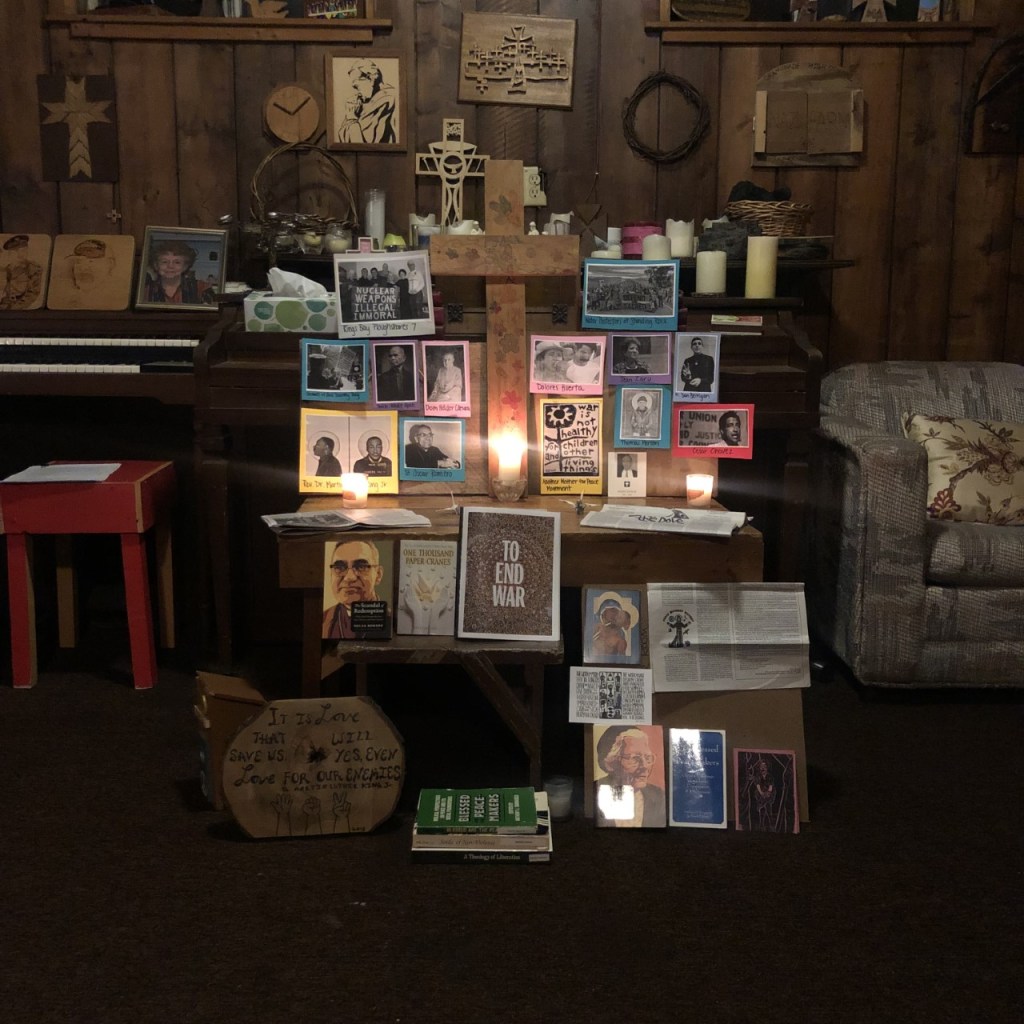
Since 1891, the Catholic Church has developed and promoted a set of teachings on social, environmental, economic, and political justice. Called CST, it presents a vision of a liberatory future where love and goodness structure social relations. The Church moreover uses CST to call Catholics to do whatever they can to make sure a future real
To date, most research on CST is theological or theoretical. Far fewer scholars, especially outside of history, have empirically assessed CST or sought to understand the potentials (and pitfalls) associated with seeking to place a counterhegemonic conception of the world amidst quotidian everyday. Grounded in theories of lived religion, I seek to close this major gap in our understanding of the Catholic Church.
In 2015, Pope Francis released Laudato Si’, which outlined the Catholic Church’s perspective on nature-society relations and their links with the Church’s broader social justice efforts. This was met with widespread acclaim, especially among environmental advocates who hoped Francis’s encyclical would usher in a new wave of Catholic socio-ecological activism unlike anything seen before. To assess whether this was happening, I interviewed parochial priests and deacons across the Diocese of Syracuse. However, despite broad optimism and indeed desire on the parts of many clergy, I found that barriers both individual and systemic were impeding meaningful uptake of Francis’s encyclical almost across the board. My results were published in Environment and Planning E: Nature and Space, and they should be accessible here.
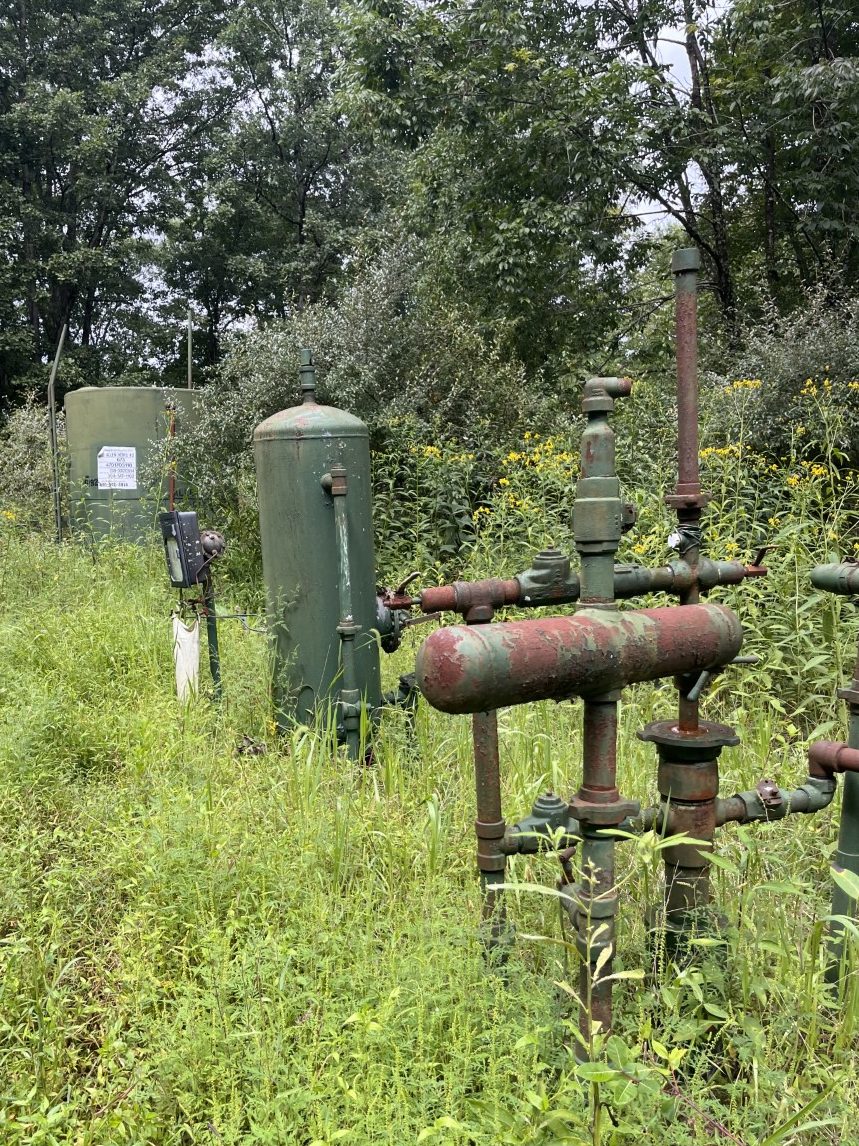
My in-progress book carries this work forward by focusing on Nazareth Farm, a Catholic intentional community and service-retreat center nestled in the hills of north-central West Virginia’s Doddridge County amid the thousands of natural gas wells which today dominate the area’s economy and socio-ecologies. Drawing from ethnographic research and detailed interviews, I examine how Nazareth Farm has sought to make their ecological conversion take place while documenting impediments they encountered along the way. One piece of this argument appeared in the Journal for the Scientific Study of Religion, available below.
Religions, Environments, and Media
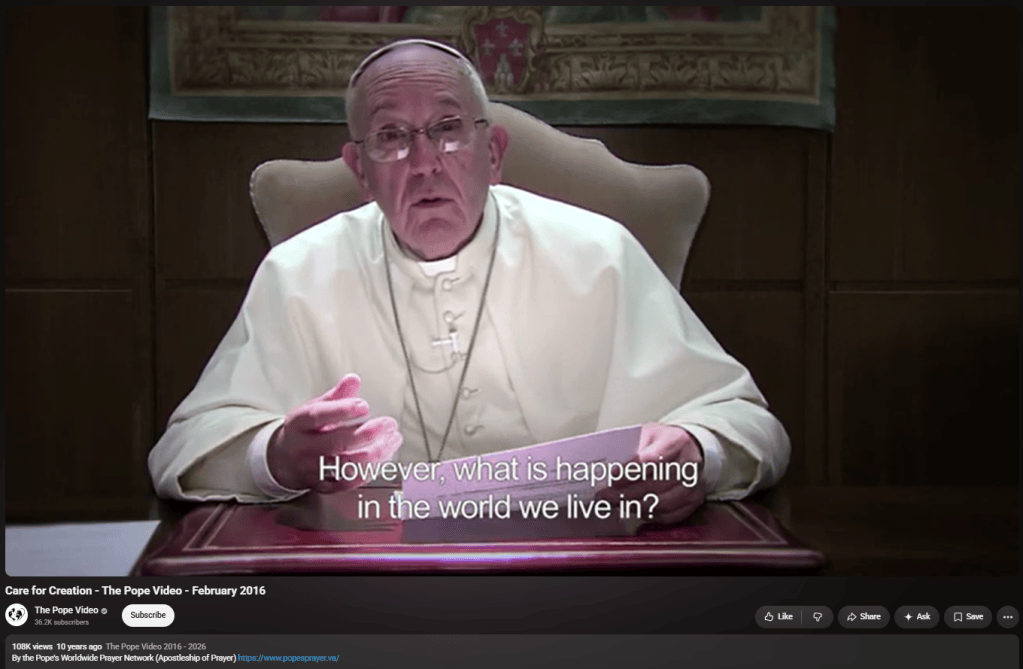
I have an interest in the various ways religiously-inflected media circulate, transform, and/or inhibit socio-ecological narratives. I began work under this umbrella by ecocritically reading a YouTube video published by the Vatican as part of their efforts to stir Catholics to environmental activism. I assessed how the choice of imagery furthered or, perhaps unintentionally subverted, the video producer’s aims. In doing so this paper drew attention to the difficulties associated with creating counterhegemonic digital media. It was published in Environmental History and should be accessible here.
This project helped me begin understanding both the potential for using YouTube as a site of research and the challenges invovled in doing so. I returned to the topic several years later, and after two cross-contiental drives, by closely reading Blake Shelton’s popular song “God’s Country” and elevn popular reaction videos that revealed the breadth of ways audiences interpreted Shelton’s theocentric land ethic in a manner that affirmed their own preconceptions about topics ranging from nature-society relations to U.S. nationalism to gender and sexual relationships. This resulted in an article published in Green Letters: Studies in Ecocriticism, linked below, which I wrote as an accessible introduction for students interested in ecocritcism but unsure where to begin.
In addition to my own research, I have found the juncture of religions, environments, and media an exciting area for collabroative scholarship. During one iteration of my religions, environments, and justice class, for instance, a small group of undergraduates and I asked whether contemproary U.S. Catholic media evidenced a post-Laudato Si’ “Francis Effect,” while I am currently working with a colleague to identify and examine socio-ecological themes in Catholic media from the 1960s. If you have interest in collaborating around these topics, please reach out!
Recent Past Projects
Religion & Nature-Society Geographies
Understanding how various human communities entwine with and co-produce the more-than-human world constitutes one of geography’s core disciplinary themes. Indeed, this is a central part of what makes geography interesting among the social sciences and allows it to speak to many of the pressing challenges facing our world today
However, despite clear calls and examples at key moments in the discipline’s history and a growing interdisciplinary consensus as to the important role religions play in mediating individual’s and community’s varied relations with the world beyond, nature-society geographers have tended to overlook religion/s and religious actors. This strand of my research program seeks to understand why this gap in geography’s literature emerged, what potential theoretical insights it has occluded, and how we might bridge this gap. The initial paper stemming from this project was published in Progress in Human Geography and should be accessible here. I also have a chapter forthcoming on this topic in the Handbook of the Geographies of Religion (Springer, 2025).